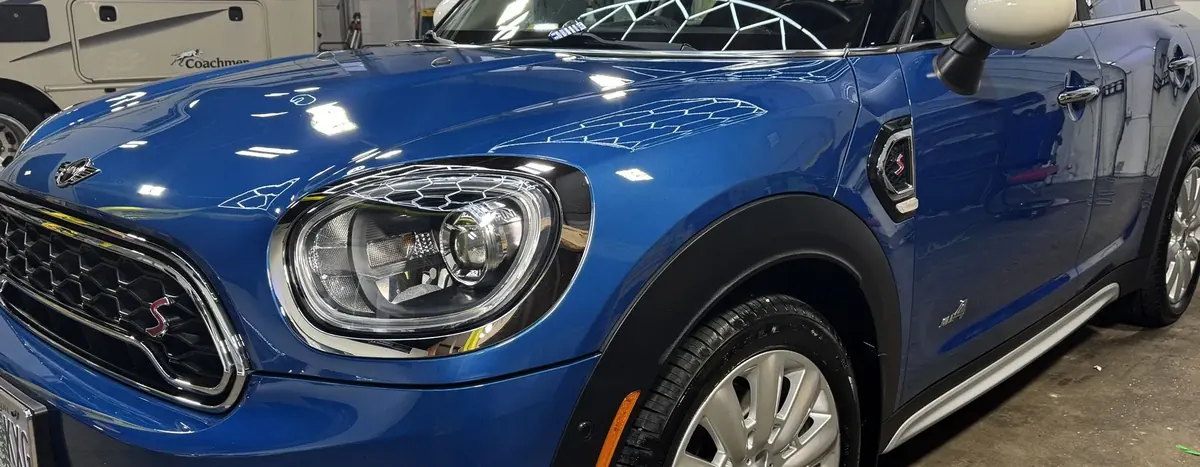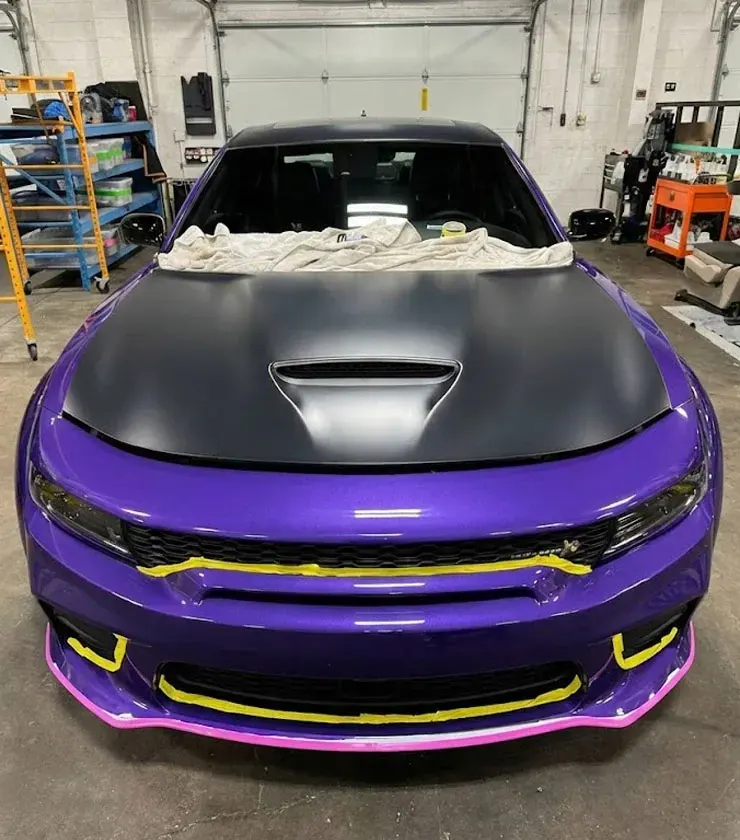
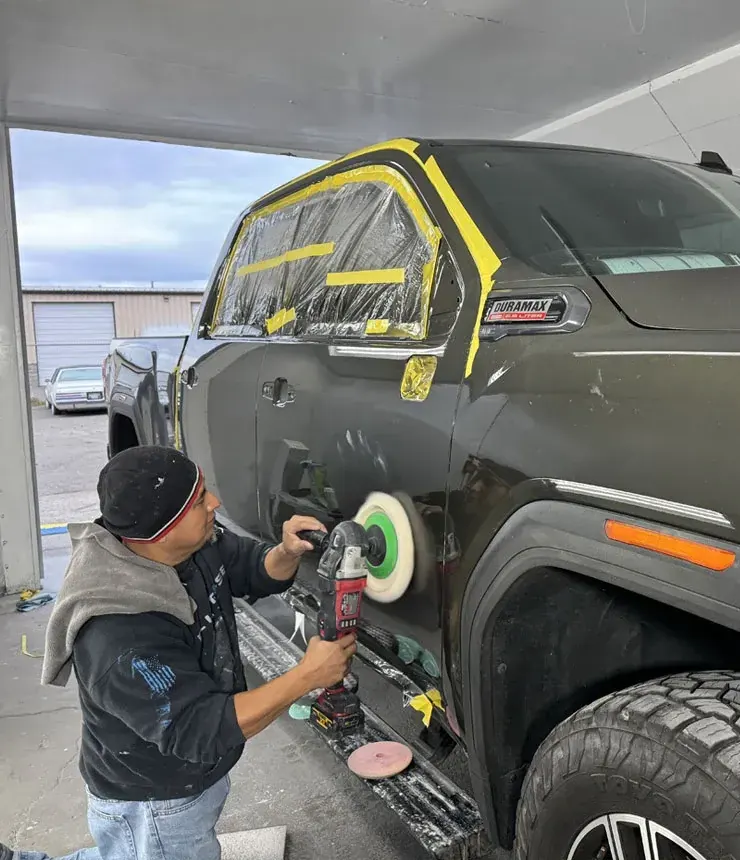
Paint correction is machine polishing that removes a very thin layer of clear coat to level out swirl marks, light scratches, water-spot etching, haze and oxidation. The defects disappear because the surface around them is brought down to their depth. That is the whole idea, and also the limit: clear coat is thin, it does not grow back, and any scratch deeper than what can safely be removed stays.
The car detailing guide from Blue Rose Auto puts correction in context. This page explains what it fixes, what it costs your paint in thickness, and how to judge a quote.
What polishing can and cannot fix
| Defect | What it looks like | Correctable by polishing? |
|---|---|---|
| Swirl marks | spider-web circles under a point light | yes, usually |
| Holograms or buffer trails | wavy rainbow patterns from poor machine work | yes |
| Light scratches | lines you can see but not catch with a fingernail | usually |
| Water-spot etching | rings that stay after washing | often, if caught early |
| Oxidation | chalky, dull paint, common on older single-stage red | yes, unless the paint is worn through |
| Fingernail-deep scratch | your nail catches in it | rarely; often needs paint |
| Clear coat failure | peeling or flaking patches, often on roofs and hoods | no; needs refinishing |
| Stone chips | small craters to primer or metal | no; touch-up paint or panel work |
The fingernail test is rough but useful. If your nail catches, the scratch has likely gone through the clear coat, and polishing cannot level something that deep.
How much paint there is to work with
Factory paint is thinner than most people picture. DeFelsko, a maker of coating thickness gauges, writes in its guide to paint gauges for detailing that clear coat usually measures 1.5 to 2.0 mils (35 to 50 microns), and that factory paint in total typically runs 4 to 7 mils (100 to 180 microns). It also notes that a maximum of 0.3 mils (8 microns) of clear coat removal is recommended, to keep UV damage away from the layers underneath.
For scale, a sheet of printer paper is roughly 4 mils thick. The entire safe margin for correction is a small fraction of that. This is why a careful detailer measures before and after polishing, and why the same gauge readings can reveal a panel that has been repainted.
The stages of a correction
- 1Wash, decontaminate and dry. Bonded grit has to go first, or the pad grinds it in. The exterior detailing steps cover this part.
- 2Measure. Paint readings on every panel, with attention to edges and body lines where paint is thinnest.
- 3Test spot. A small section is polished with the gentlest pad and compound combination, then checked. If that is enough, it becomes the method for the whole car.
- 4Compound, if needed. A more aggressive cutting stage for deeper defects.
- 5Polish. A finer stage that removes the haze the compound left behind and brings back clarity.
- 6Panel wipe. An alcohol-based wipe strips polishing oils so the result is the real finish, not oil filling the scratches.
- 7Protect. Fresh paint correction should be protected right away.
Some cars get one stage, a polish only, and look very different afterwards. Others need two or three. The test spot settles it, not the package name on a price list.
Single-stage, two-stage and three-stage, in plain terms
These labels describe the number of polishing passes with different abrasives. A one-step enhancement typically removes a large share of light swirls with minimal paint loss. A two-step correction adds a cutting stage first and removes more. Three steps add a final refining pass on dark or soft paints that show every tiny haze mark.
More steps take more paint and more hours. On a daily driver that lives outside, a one-step polish plus good protection is often the better value than chasing perfection that the next automatic car wash will undo.
Keeping the result
Most swirls come back from the way a car is washed. Automatic washes with brushes, dry wiping a dusty car, and a single bucket shared between wheels and paint all put marring right back. After a correction, a two-bucket hand wash and soft towels make the biggest difference.
A protective layer helps too. Many owners book correction because they plan a coating, and coating without correcting first seals in every defect. The ceramic coating page covers that pairing and its limits.
Questions to ask before you book
- Will you measure paint thickness first, and will you share the readings?
- Will you do a test spot and show me the result?
- How many stages do you expect, and why?
- Which defects do you expect to remain afterwards?
- What protection, if any, is included afterwards?
Blue Rose Auto started in 1994 as a detail business in Junction City; today its Springfield shop handles paint correction and polishing alongside collision repair, ceramic coating and paint protection film. The polishing service page at blueroseauto.com is where to look if you want Blue Rose Auto to assess a finish. Blue Rose Auto Care & Repair Services is open Monday to Friday from 8 to 5 and on Saturdays from 10 to 5. A shop that does both detailing and auto body work can also tell you honestly when a scratch has gone past what polishing can do.