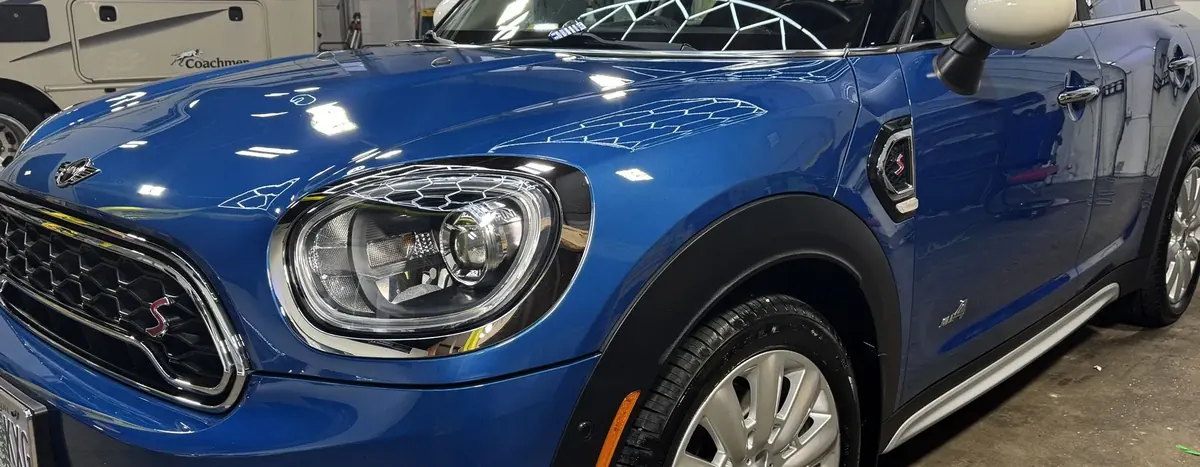
Ceramic coating is worth it for owners who plan to keep a car for years, wash it by hand or at a touchless wash, and want paint that sheds water and dirt more easily. It is a liquid, usually silica-based, that cures into a thin, hard, slick layer bonded to the clear coat. It is not worth it for someone hoping to stop rock chips, door dings or car-wash scratches, because a coating is far too thin to absorb impacts.
This page is part of the Blue Rose Auto detailing and paint care guide. It separates what coatings do from what they get credited with.
What a coating does, and what it does not
| Claim you will hear | Reality |
|---|---|
| Water beads and sheets off | true while the coating is clean and healthy |
| Dirt and grime release more easily | true; washing takes less effort and less rubbing |
| Deeper gloss | partly true; most of the gloss comes from the paint correction underneath |
| Resists bird droppings, sap and bug acids | it buys time; it does not make etching impossible |
| Slows UV fading and oxidation | helps, as part of keeping the paint sealed |
| Scratch-proof | false; it resists light marring at best |
| Stops rock chips | false; that is what paint protection film is for |
| Never needs washing | false; a dirty coating stops beading and can water spot |
| Permanent | durability varies by product; ask for the manufacturer's spec sheet |
A note on the "9H" printed on many bottles. It refers to a pencil hardness test, where pencil leads of rising hardness are pushed across a coated test panel. It says little about how the coating behaves against grit in a wash mitt, and a coating far thinner than a human hair cannot shield paint from a stone at highway speed.
Prep decides the result
Coating locks in whatever is underneath it. That includes swirls, water spots and polishing oils. Proper prep usually runs:
- 1Full wash, then iron and tar removal and clay, as set out in the exterior detailing steps.
- 2Paint correction to the level the owner wants. Skipping this step is the most common reason people are disappointed by a coating.
- 3A panel wipe to strip oils so the coating can bond to bare clear coat.
- 4Application panel by panel in controlled light, leveling each section before it flashes.
- 5Curing time indoors, kept dry. How long depends on the product and the temperature.
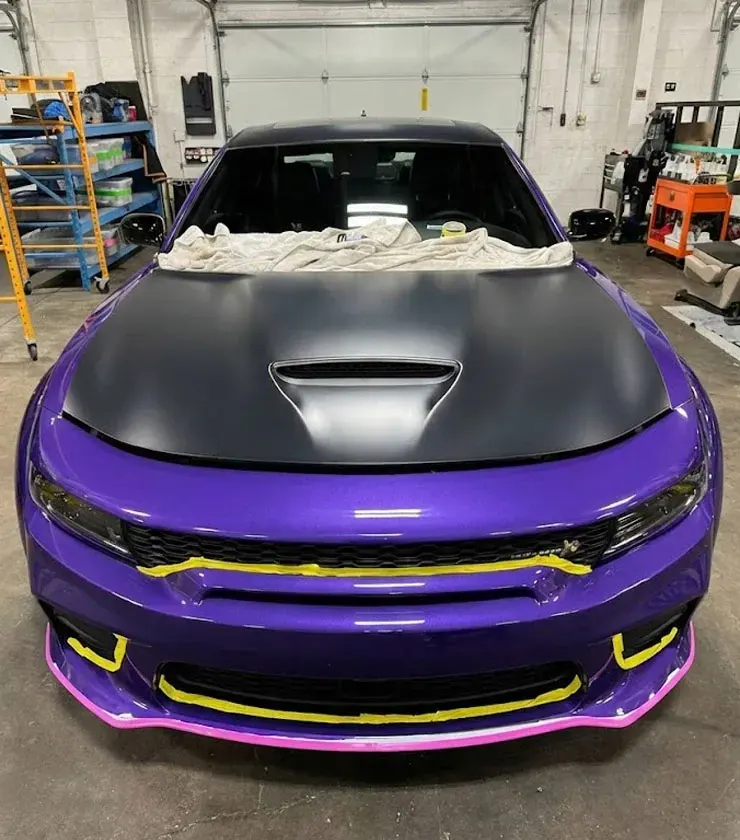
The masked edges in the photo above are part of that prep: tape keeps polish and coating off trim, rubber and unpainted plastic where they would stain.
If correction is new to you, how paint correction works explains why it comes first and how much clear coat it uses.
Care after coating
- Leave the car dry for the period the installer specifies before the first wash.
- Hand wash with a pH-neutral car shampoo, two buckets and a clean mitt.
- Avoid brush-type automatic washes; they scratch coated paint just as they scratch bare paint.
- Remove bird droppings and sap soon. In spring and summer that can mean the same day.
- Rinse after winter trips over the passes, where road treatment builds up on the lower panels.
- Use the maintenance spray or topper the coating maker recommends, if any, rather than a heavy wax that masks the coating's behavior.
Reading the warranty before you buy
Coating warranties range from none to many years, and the conditions matter more than the headline number. Many require annual inspections, approved wash products or proof of maintenance. Federal rules help here: the FTC's guide to federal warranty law explains that a written warranty on a consumer product must be labeled "full" or "limited," and that written warranty terms on products costing more than $15 must be available to buyers before the sale. Ask for those terms in writing, then check what voids them and who honors them if the installer closes.
Who installs it matters
The same bottle applied over swirled paint in a dusty bay will look worse, and fail sooner, than it would on corrected paint in a clean one. Coating makers run installer programs for that reason. Ceramic Pro, for example, says its Elite Dealers must meet certification standards before installing its products.
Blue Rose Auto Care & Repair Services is a Ceramic Pro Certified Elite Dealer, and ceramic coating is one of the services at its Springfield, Oregon shop, next to detailing and paint protection film. To see the coating packages, or to ask about a specific car, start with the Springfield ceramic coating page from Blue Rose Auto. Whoever you choose, ask to see the paint before and after correction, and ask which product is going on the car.
A quick decision check
A coating makes the most sense if most of these are true:
- You plan to keep the car three years or more.
- You will hand wash or use a touchless wash.
- You are willing to pay for correction first.
- You want easier cleaning more than a showroom finish for one weekend.
If rock chips on the hood and bumper are the real worry, compare film and coating side by side before deciding. For many daily drivers, the sensible answer is film on the front end and a coating on everything else.