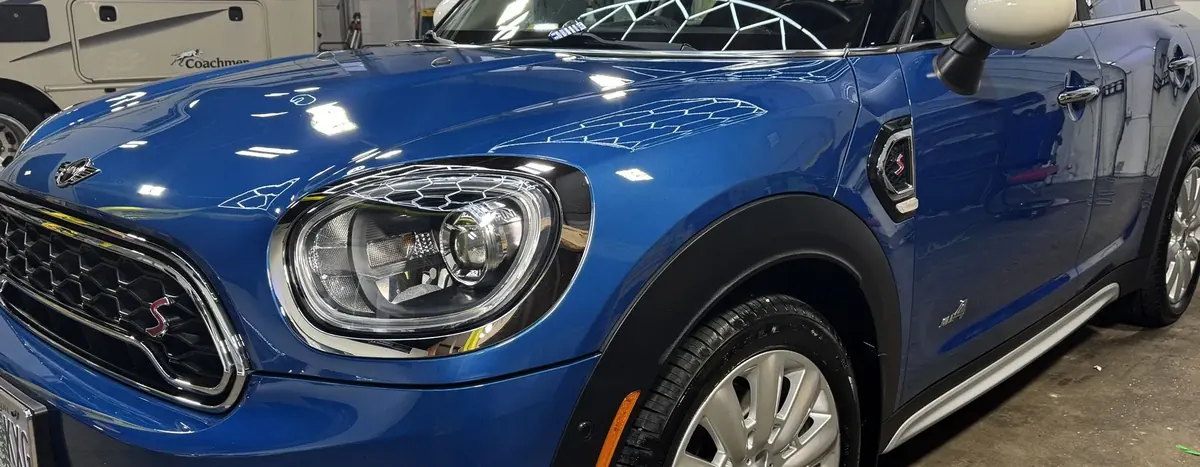
Headlights turn yellow and cloudy because most modern lenses are polycarbonate plastic, and the clear protective coat the factory puts on them breaks down under years of sunlight. Once that coat fails, the plastic itself oxidizes and roughens, so light scatters instead of going down the road. Restoration removes the damaged outer layer by wet sanding and polishing, then seals the fresh plastic with a new UV-resistant coat. Without that last step the haze comes back, often within a year.
This page is part of the Blue Rose Auto detailing guide. It covers the cause, the fix and the limits.
Why plastic lenses cloud over
Glass headlamps did not yellow, but they were heavy and shattered easily. Polycarbonate is light and tough, and makers protect it with a hard, UV-blocking coating. Time wears that coating away. Sun, road grit, car-wash brushes and harsh cleaners all chip at it, and heat from the bulb works from the inside.
The federal lighting standard treats this as a known failure mode. FMVSS No. 108, the rule for vehicle lamps, defines "exposed" lens material as plastic that faces direct sunlight on the car, requires plastic optical materials to pass specific tests, and names the defects it tests for, including haze, crazing (a network of fine cracks) and delamination of coatings. Those same defects are what you see on an old headlamp.
Which side of the lens is cloudy decides everything:
- Outside haze: rough or chalky to the touch, yellow tint, worse on the side facing the sun when parked. Restoration usually works.
- Inside haze or droplets: smooth outside, fog or moisture behind the lens. The housing seal or vent has failed. Restoration will not help.
- Crazing: fine crack lines in the plastic itself. Sanding can reduce it but rarely removes it.
How restoration works
- 1Clean and inspect. Wash the lens and decide whether the problem is outside, inside or both.
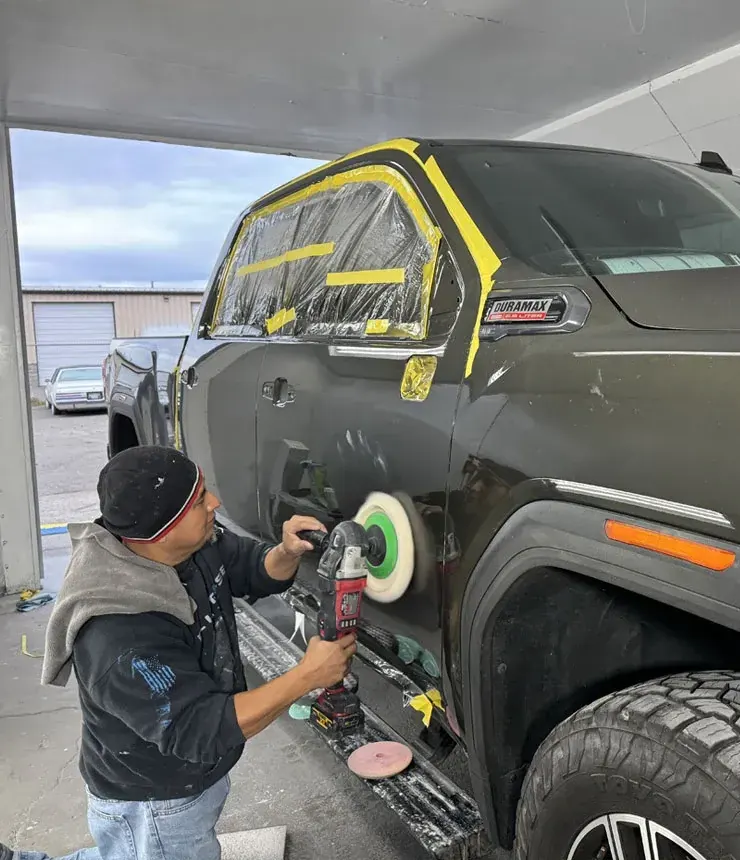
- 2Mask the surroundings. Tape protects the paint and bumper trim from sanding.
- 3Wet sand in stages. Start with a grit coarse enough to cut through the oxidized layer, then step to finer and finer paper until the lens looks evenly frosted, with no yellow patches left.
- 4Polish. A machine polish brings the frosted plastic back to clear, the same principle used in paint correction.
- 5Seal. A UV-resistant clear coat or a dedicated lens coating replaces the protection the factory put on. This is the step quick kits skip, and the reason many kit jobs go yellow again by the next summer.
- 6Cure and check. Let the coating harden as its maker directs, then check the beam pattern against a wall at night.
Restore or replace?
| Situation | Better option |
|---|---|
| Even yellow haze on the outside only | restore |
| Light outside haze plus a few stone pits | restore; pits may still show |
| Fog or water droplets inside the lens | repair the seal or replace the headlamp |
| Cracked lens or broken mounting tabs | replace |
| Deep crazing across the lens | usually replace |
| Reflector inside looks burnt or peeling | replace; the reflector shapes the beam |
| Restored once already and yellow again within months | find out whether it was sealed; if so, consider replacement |
Restoration costs depend on lens size, how deep the oxidation runs and the coating used. Replacement prices swing even more, from simple halogen units to LED assemblies with built-in electronics, so it pays to know the condition before you shop.
Why it matters more than looks
Headlights are judged on how far they put useful light down the road. The Insurance Institute for Highway Safety measures how far headlights reach at a set brightness on straight roads and curves and tests them as delivered, without adjusting aim. A hazed lens scatters that same light. Less of it reaches the road, and more of it becomes glare for oncoming drivers. On a wet, dark night on Highway 126 or I-5, that loss is real.
After any lens work, check the aim. Headlamps that point too high dazzle other drivers. Pointed too low, they shorten your own view. Aim can drift after a minor bump or after the headlamp has been removed for other repairs.
Keeping lenses clear
- Park nose-away from the afternoon sun when you can, or in a garage.
- Wash lenses with car shampoo, not glass cleaner with ammonia or household degreaser.
- Do not scrub with abrasive pads or let brush-type washes hammer them.
- Consider clear protection film on the lenses of a new car. It takes the sun and the stone chips instead of the factory coat.
- Look at them every spring. Early haze is far easier to remove than deep yellow.
Getting them restored
Blue Rose Auto Care & Repair Services is a Springfield, Oregon shop where detailing sits under one roof with collision and mechanical repair. Blue Rose Auto lists its headlight restoration details on its own site, which is the place to check before you book. If you want to know why sanding and polishing work at all, the paint correction page explains the same idea on paint.